Free UK & EU delivery on orders over £100
Cold water immersion has one of the better-supported track records in sports recovery — and one of the more important caveats, depending entirely on what kind of training you're recovering from. Conflating the two is where a lot of well-meaning plunge advice goes wrong.
The foundational source here is Bleakley and colleagues' 2012 Cochrane review, which pooled multiple randomized controlled trials comparing cold water immersion against passive rest or no intervention following exercise. The consistent result: cold water immersion reduces delayed-onset muscle soreness (DOMS) at 24, 48, and 72 hours afterward, compared to doing nothing.
Two things are worth holding onto about how Cochrane framed this. First, the effect is on perceived soreness specifically — the review found less consistent evidence that immersion changes objective markers of muscle damage like creatine kinase, which means the finding is best read as "people report feeling less sore," not "muscle tissue is measurably less damaged." Second, and worth stating plainly rather than softening: Cochrane graded the underlying trial evidence as low-certainty. The effect shows up consistently across the pooled trials, but the individual trials feeding that pool are small, which is precisely why a systematic review carries more weight than any single study claiming a bigger or more dramatic effect. Low-certainty isn't "no evidence" — it's an honest statement about the size and quality of the trials available, and it's the correct level of confidence to hold here.
This is where the picture gets more complicated, and where a lot of general "ice baths help recovery" advice quietly stops applying. Roberts and colleagues (2015), publishing in The Journal of Physiology, ran a study specifically on the strength-training context rather than the endurance or general-exercise context the Cochrane review mostly draws from. In it, 21 physically active men strength trained for 12 weeks, randomised into two groups: one used cold water immersion after each session, the other used active recovery (low-intensity cycling).
The finding: post-exercise cold water immersion attenuated the acute anabolic signalling pathways associated with muscle growth, and this translated into blunted long-term muscle hypertrophy and strength adaptations compared to the non-immersed condition over the course of the study. The proposed mechanism is that the same inflammatory and cellular stress response cold water suppresses — which is plausibly part of why it reduces perceived soreness — is also part of the signalling cascade that tells muscle tissue to adapt and grow after a strength stimulus. Blunting one may mean blunting the other.
This is a real, published finding in a peer-reviewed physiology journal, not an internet myth, and it deserves to be taken seriously by anyone lifting specifically for size or strength gains who also plunges regularly.
This article is for general information and does not constitute medical advice. Cold water immersion is not a medical treatment. Consult a professional if you have cardiovascular conditions.
A clear-eyed look at the evidence behind cold water immersion — muscle soreness, mood, sleep, and where the science is still thin.
The research clusters around a specific time window, not 'as long as you can stand it.' Here's what the meta-analysis found, and how to build up to it safely.
How cold is cold enough, how long should you stay in, and does colder always mean better? A practical guide grounded in the immersion research.
It's worth being precise about what these two findings do and don't say together, because they're often presented as though one disproves the other. They don't. The Cochrane review is a broad synthesis across exercise types, with soreness as the outcome. Roberts' study is a narrower, strength-training-specific investigation with long-term hypertrophy and strength adaptation as the outcome. Both can be true simultaneously: cold water immersion can genuinely reduce how sore you feel after a session, while also blunting some of the training adaptation you were chasing, if that training was specifically resistance work aimed at building muscle.
The practical upshot is that "does cold water immersion help recovery" doesn't have one answer — it depends on what you mean by recovery. Feeling less sore the next day: yes, moderately, per Bleakley. Maximizing long-term muscle growth from that same session: the Roberts findings suggest immediate post-lift immersion may work against you.
Given both findings, a reasonable, evidence-aligned approach splits by training goal rather than treating "recovery" as one undifferentiated thing:
If your priority is endurance performance, general fatigue, or simply feeling less sore — after a long run, a hard conditioning session, or training where hypertrophy isn't the main objective — the Cochrane-supported protocol (roughly 10–15 minutes at 10–15°C, detailed in our duration guide) applies fairly directly, with no strong evidence of a downside specific to that context.
If your priority is hypertrophy or strength adaptation from resistance training, the Roberts findings suggest it's worth separating the plunge from the lift by more than a few minutes. Practical options with some physiological logic behind them: plunge several hours after training rather than immediately afterward, plunge on a separate day entirely (for example, after a conditioning session rather than a heavy lift day), or reserve immersion for lower-priority training blocks where soreness reduction matters more than maximizing adaptation from that specific session.
Neither of these is a precisely validated protocol — the Roberts study tested "immediately after" versus a non-immersed control, not a range of delayed timings — so "wait a few hours" is a reasonable, conservative interpretation of the mechanism rather than a directly tested recommendation. It's the honest middle ground between "never plunge if you lift" (too strong a conclusion from one study) and "timing doesn't matter" (ignoring a real finding).
Machado and colleagues' meta-analysis on temperature and duration (covered fully in our temperature guide) is relevant to the soreness side of this picture specifically: it found an 11–15°C, 11–15 minute range used across trials, without a clear dose-response relationship for going colder or longer. There isn't equivalent research testing whether a milder or shorter immersion reduces the hypertrophy-blunting effect Roberts found — that's a genuine gap, and it's worth being honest that "a shorter, milder plunge is safer for muscle growth" is a plausible guess rather than a tested finding.
It's worth being specific about the design, because the strength of a caveat depends on how directly it was tested. Roberts and colleagues randomised 21 men into two groups who strength trained for 12 weeks, one using cold water immersion after each session and the other active recovery, then compared adaptations between the groups. That's a genuine long-term training study — not a single-session lab measurement of a signalling molecule — which is part of why the finding carries real weight rather than being a speculative mechanism story. The outcomes measured included muscle fiber cross-sectional area, myonuclei number, and functional strength measures, not just a proxy marker.
What the study didn't test is equally important: it used a specific immersion protocol (cold water, immediately post-training, repeated across a structured 12-week block), not a range of timings or temperatures. It doesn't tell us whether immersing 6 hours later produces the same blunting effect, a smaller one, or none at all — that's an inference from the underlying mechanism (acute inflammatory signalling drives adaptation, and immersion suppresses that signalling in the hours immediately following exercise), not a directly tested comparison. Treat "wait a few hours" as a reasonable, mechanism-based precaution rather than a validated protocol with its own trial behind it.
No — and it's worth being clear that the Roberts finding is specific to a training goal (hypertrophy and strength adaptation from resistance training), not a blanket case against cold water immersion for anyone who exercises. An endurance athlete managing fatigue across a heavy race calendar, someone doing conditioning work where soreness reduction matters more than maximizing muscular adaptation from that specific session, or anyone simply wanting to feel less sore before returning to work or daily life the next day is operating under a different cost-benefit than a bodybuilder or powerlifter in a dedicated hypertrophy block. The Cochrane-backed soreness reduction still applies broadly; the hypertrophy caveat is a targeted exception for a specific goal and a specific window of timing, not a general reason to avoid cold water immersion after any kind of training.
None of the studies above tell you how you specifically will respond — pooled trial results describe an average effect across a group of participants, not a guarantee for any one person. Some lifters may notice little practical difference from timing their plunge differently; others training at a higher volume or intensity, where the adaptive signal from training is already the main lever they're pulling, may be more sensitive to anything that blunts it. If muscle growth is a priority you're tracking closely, treating the timing separation as a low-cost experiment — try it for a training block, watch your own progress — is a reasonable way to apply population-level findings to an individual case, rather than assuming the average effect size in the Roberts study will show up identically in your own training log.
Cold water immersion has real, Cochrane-backed support for reducing perceived muscle soreness, with the appropriate caveat that the underlying trial evidence is low-certainty rather than ironclad. Separately, and just as real, is the Roberts finding that immersing immediately after resistance training may blunt the long-term muscle-building response from that training. These aren't contradictory — they're describing different outcomes for different training contexts. If you're recovering from endurance work or just want to feel less sore, the standard protocol applies. If you're chasing muscle growth from strength training, separate your plunge from your lift by time or by day rather than doing both back to back, and treat that as a sensible precaution based on the best available mechanism, not a rigidly tested rule.
This article is for general information and does not constitute medical advice. Cold water immersion carries cardiovascular risk, particularly for people with heart conditions, uncontrolled high blood pressure, or a history of arrhythmia. Consult a doctor before starting, never plunge alone, and stop immediately if you feel unwell.
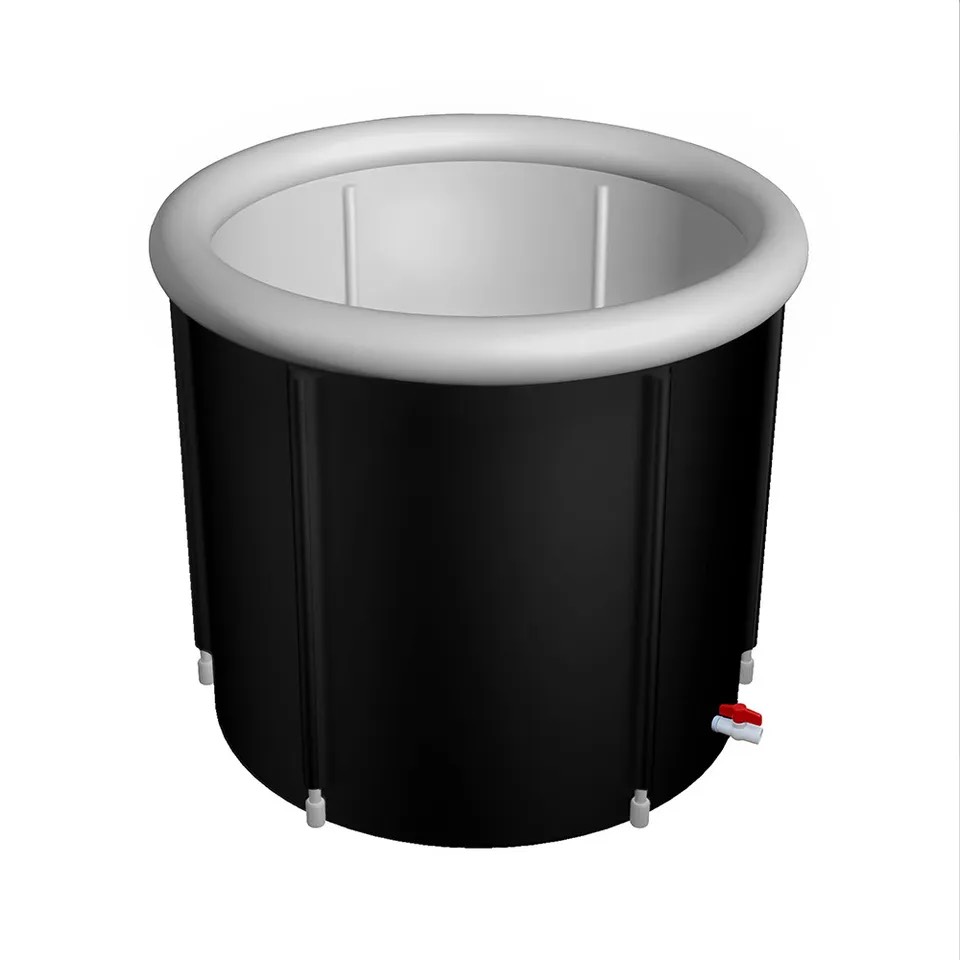
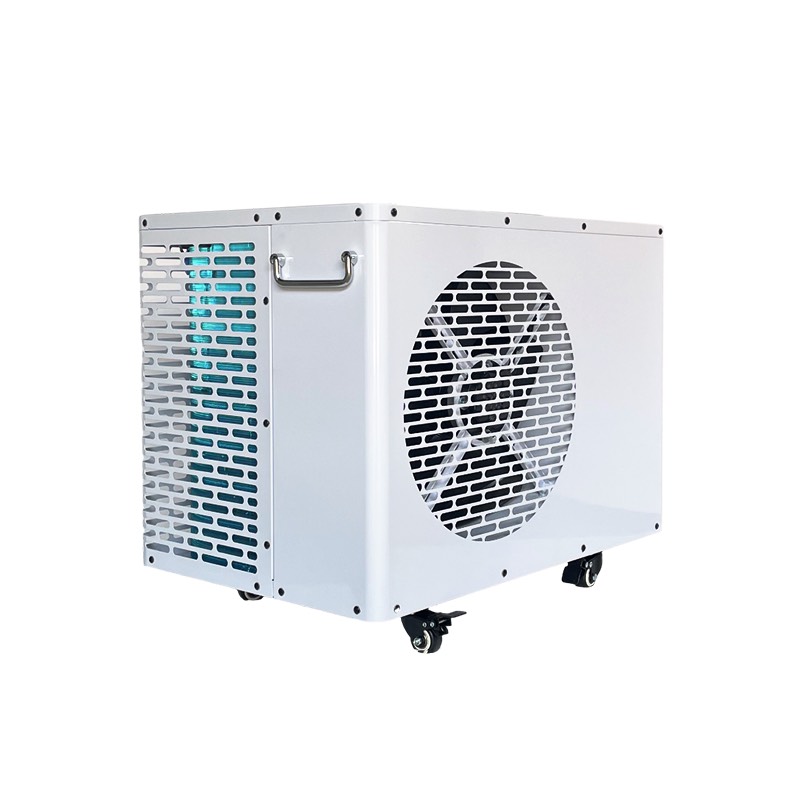
Kaldera Plunge 320 + Chill Core 500 + Thermometer + Tub Care Kit, boxed together