Cold plunging gets sold hard on mood and energy — "instant dopamine," "fixes your morning," sometimes even "treats depression." Some of that is grounded in real, measured physiology. Some of it is a leap well past what any study has actually shown. Here's the honest breakdown.
The real, measured finding: a noradrenaline spike
The strongest piece of evidence in this specific area comes from Šrámek and colleagues' controlled laboratory study, which immersed participants in water across a range of temperatures and tracked their physiological responses. The key finding: immersion in cold water (14°C) produced a substantially larger rise in circulating noradrenaline (norepinephrine) than immersion in warmer water.
This matters because noradrenaline isn't a soft or subjective marker — it's a catecholamine with well-established roles in alertness, attention, and the body's acute stress response. A measured rise in noradrenaline during cold immersion is a real, mechanistic explanation for why people consistently describe cold water as instantly clarifying or energizing. It's not "in your head" in the dismissive sense — it's a genuine neurochemical event that a lab can measure with a blood draw.
What it isn't is a mood or energy outcome measured over days, weeks, or in relation to any clinical scale. Šrámek's study measured an acute physiological marker during and immediately after immersion — not self-reported mood the next morning, not energy levels over a working week, and not any validated psychological instrument. "Cold water spikes noradrenaline" is well-supported. "Cold water gives you lasting energy" is an extrapolation from that finding, not a separate thing the study tested.
What Buijze's trial adds — and where it stops
Buijze and colleagues' 2016 randomized controlled trial is the other major data point relevant here, though its primary outcome was actually sickness absence, not mood. Over 3,000 adults were randomized to a graded cold-shower protocol or normal showering and followed for 90 days. The headline result was a 29% relative reduction in sick-leave days in the cold-shower groups, with no difference in self-reported illness rates between groups — people in the cold-shower group got sick just as often, but missed less work while unwell.
References
1.Šrámek P, Šimečková M, Janský L, Šavlíková J, Vybíral S. (2000). Human physiological responses to immersion into water of different temperatures. European Journal of Applied Physiology, 81(5), 436–442.
This article is for general information and does not constitute medical advice. Cold water immersion is not a medical treatment. Consult a professional if you have cardiovascular conditions.
Frequently asked questions
Does cold exposure actually boost energy, or does it just feel that way?
There's a real physiological basis for the feeling: Šrámek and colleagues measured a substantial rise in circulating noradrenaline during cold water immersion, and noradrenaline is a genuine driver of alertness. That's a measured acute response, not just a placebo story — but it's a same-day alertness finding, not evidence of a lasting energy increase.
Can cold exposure treat depression or anxiety?
This is not established by controlled trial evidence. The physiological mechanisms proposed (noradrenaline, parasympathetic tone) are plausible and worth further study, but claims that cold exposure treats clinical depression or anxiety go well beyond what Šrámek's or Buijze's studies actually tested. Anyone considering cold exposure alongside a mental health condition should talk to their doctor and not treat it as a substitute for treatment.
How quickly does the mood or alertness effect show up?
The noradrenaline response Šrámek's group measured is rapid — a laboratory-measured acute rise during cold immersion, consistent with the 'instantly clarifying' feeling people describe. It's an in-the-moment physiological event, not a build-up over weeks.
Is there a safety concern with using cold exposure for mood specifically?
The same cardiovascular caution applies regardless of why you're plunging. The cold shock response in the first 30–90 seconds causes a spike in heart rate and blood pressure, which is a real risk for anyone with a heart condition, uncontrolled high blood pressure, or arrhythmia history — talk to a doctor first, and never plunge alone.
That's a real result, and it's suggestive of something beyond pure physical illness — resilience, disposition toward work, or a broader wellbeing effect could plausibly explain missing less work despite equal illness rates. But it's worth being precise: the trial didn't directly measure mood, energy, or any psychological outcome with a validated scale. Any read of Buijze's trial as "cold showers improve your mood" is inferring a mechanism the study wasn't designed to isolate. The sickness-absence finding is the tested outcome; mood is a plausible but untested explanation for part of it.
Where the evidence is genuinely thin: depression and mental health treatment claims
This is the section worth reading carefully if you've seen cold exposure marketed as a treatment for depression or anxiety, because that claim substantially outruns the evidence available. Neither Šrámek's acute physiology study nor Buijze's sickness-absence trial used a clinical population, a validated depression or anxiety scale, or a treatment-outcome design. Neither was built to answer "does cold exposure treat a mood disorder," and neither can honestly be cited as evidence that it does.
What exists in this space beyond these two studies is largely small pilot work, case reports, and anecdote — the kind of evidence that can reasonably motivate further research but that doesn't clear the bar of a well-controlled clinical trial. The proposed mechanisms (noradrenaline release, parasympathetic rebound, a hormetic stress-adaptation response) are physiologically plausible reasons someone might investigate cold exposure as an adjunct to mental health treatment. Plausible mechanism is not the same standard of evidence as a randomized trial in a clinical population, and nobody should treat cold plunging as a substitute for evidence-based mental health treatment or stop other treatment in favor of it. If you're managing depression or anxiety, cold exposure is — at most — something to discuss with a clinician as a possible adjunct, not a replacement for care.
The honest, narrower claim that does hold up
Stripped of the overreach, what's actually well-supported is this: cold water immersion triggers a rapid, measurable rise in noradrenaline, a neurochemical closely tied to alertness, and this is a plausible and reasonably direct explanation for the acute "instantly awake" feeling people report during and immediately after a plunge. Separately, a large randomized trial found a real reduction in sickness-related absence from a graded cold-shower habit, though the mechanism for that specific finding (illness resilience versus a broader wellbeing effect versus something else) isn't fully isolated by the trial itself.
Both of those are genuine, citable findings. Neither one is a clinical mental-health treatment claim, and conflating "real physiological jolt" with "proven mood therapy" is exactly the kind of gap that separates honest cold-exposure content from marketing copy.
The safety note that applies here too
Whatever your reason for plunging, the same cardiovascular caution from the rest of the cold-exposure literature applies. Tipton and colleagues' review describes the cold shock response — the involuntary gasp reflex, spike in breathing rate, and rise in heart rate and blood pressure in the first 30 to 90 seconds of cold exposure — as a real physiological demand, not a purely psychological one. This is the same response producing the noradrenaline spike that Šrámek measured, and it's precisely why people with cardiovascular disease, arrhythmia risk, or uncontrolled hypertension should check with a doctor before starting, and why plunging alone is never a good idea regardless of how good the mood benefit might feel.
Why the noradrenaline finding gets over-extended so often
It's worth understanding why "cold water spikes noradrenaline" so easily mutates into much bigger claims, because the pattern is common across cold-exposure marketing generally. Noradrenaline is a genuinely well-understood molecule with real, textbook-level roles in the body's stress and alertness systems, which gives any finding involving it an air of scientific solidity. But a single acute measurement of a circulating hormone during a lab-controlled immersion session is a narrow, specific data point. It tells you something happened in the bloodstream during and shortly after cold exposure. It does not, by itself, tell you anything about sustained mood, motivation, cognitive performance over a workday, or resilience to stress over months — those would each require their own dedicated study design, with their own validated outcome measures, and none of those studies exist yet for cold water immersion specifically. The gap between "we measured a hormone spike" and "this improves your life in this specific way" is where most of the overreach in this space lives, and it's worth applying that same question — what was actually measured, versus what's being claimed — to any new cold-exposure claim you encounter.
What would actually settle the depression and anxiety question
For readers specifically curious what it would take to move cold exposure from "plausible mechanism" to "supported treatment" for mood disorders, the bar is well established in clinical research generally: a randomized controlled trial in a clinically diagnosed population, using a validated outcome measure (a standardized depression or anxiety scale, not a self-reported "felt better" question), with an appropriate control condition and a follow-up period long enough to distinguish a lasting effect from a short-term mood bump. Nothing meeting that description currently exists for cold water immersion. That's not a permanent verdict — it's a statement about where the evidence currently stands, and a specific, falsifiable description of what would change that. Until a trial like that exists, the honest position is "plausible, worth studying, not yet established" rather than either extreme of "proven" or "nonsense."
A word on individual response
Both the noradrenaline finding and the sickness-absence trial describe average effects across groups of participants, not a guarantee of how any one person will respond. Some people report the alertness effect fading within minutes of getting out; others describe it lasting well into the day. Neither Šrámek's nor Buijze's study was designed to explain that variation, so if cold exposure doesn't produce a noticeable mood or energy shift for you personally, that's not evidence you're "doing it wrong" — individual variability in catecholamine response and subjective experience is common and expected, and it's a reasonable thing to track for yourself rather than assume from the group-level averages these studies report.
What this means in practice
If you're plunging for the acute alertness effect, the evidence is genuinely on your side — a real noradrenaline spike is a solid physiological basis for feeling sharper immediately afterward, and that's consistent with what both Šrámek's lab data and general reports of the experience describe. If you're hoping for a broader wellbeing lift over time, Buijze's trial gives you a real, if narrower, data point in the sickness-absence outcome, though the exact mechanism isn't pinned down. If you've heard cold exposure described as a treatment for depression or anxiety, that claim is not supported by the studies available, and it deserves the same skepticism you'd apply to any wellness claim that's ahead of its evidence — worth watching for future research, not worth acting on as though it were already established.
This article is for general information and does not constitute medical advice. Cold water immersion carries cardiovascular risk, particularly for people with heart conditions, uncontrolled high blood pressure, or a history of arrhythmia, and is not a substitute for treatment of any mental health condition. Consult a doctor before starting, never plunge alone, and stop immediately if you feel unwell.
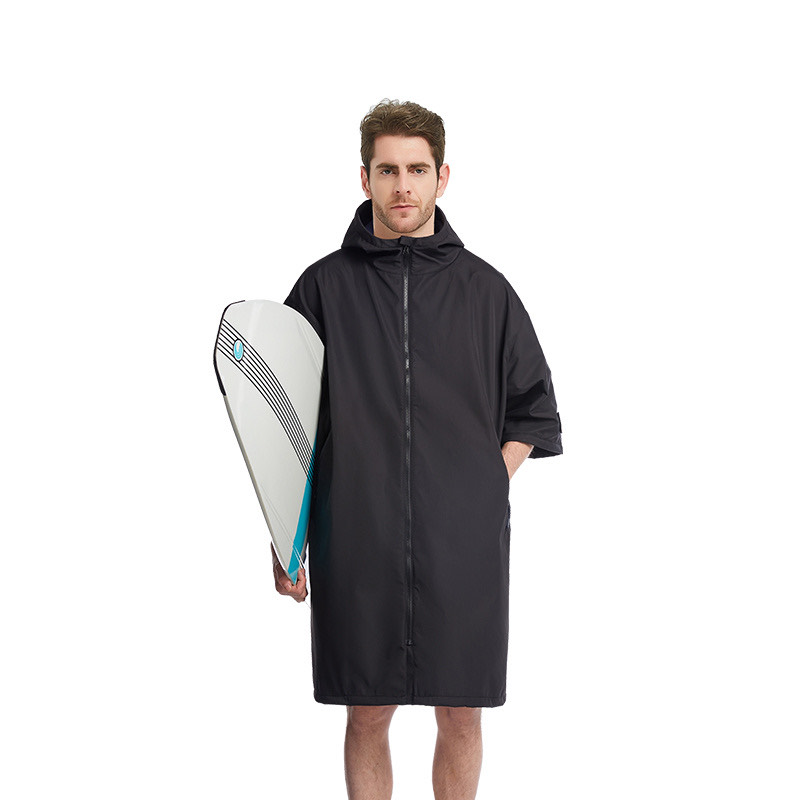
Thermal Change Robe
Insulated changing robe with fleece lining, dry in minutes