Free UK & EU delivery on orders over £100
Verdict: The Aldi/Bestway inflatable is a genuinely fine way to find out if cold exposure is for you. It's not a good long-term setup once you're plunging regularly — the insulation, durability, and chiller-compatibility just aren't there. Start here if you're unsure; upgrade once you know you'll stick with it.
| Feature | Aldi/Bestway inflatable | Kaldera Plunge 80 |
|---|---|---|
| Price | £24.99-£29.99, rotating Specialbuy (checked July 2026) | £59 |
| Material | Tritech puncture-resistant PVC (checked July 2026) | Rigid insulated build |
| Setup time | ~20 minutes to inflate (checked July 2026) | Similar, no inflation required |
| Insulation | None stated — ice melts faster | Insulated walls, holds temperature longer |
| Chiller compatible | No | Yes |
| Durability | PVC, puncture risk with regular use/storage | Rigid build designed for repeated use |
| Availability | Rotating Specialbuy — in and out of stock (checked July 2026) | Always in stock |
We sell ice baths, so a review of a £25 rival from Aldi is exactly the kind of thing you should read skeptically. Here's our attempt to be straight with you anyway: it's a genuinely reasonable product for what it costs, and we'd rather tell you honestly when to use it than pretend it doesn't exist.
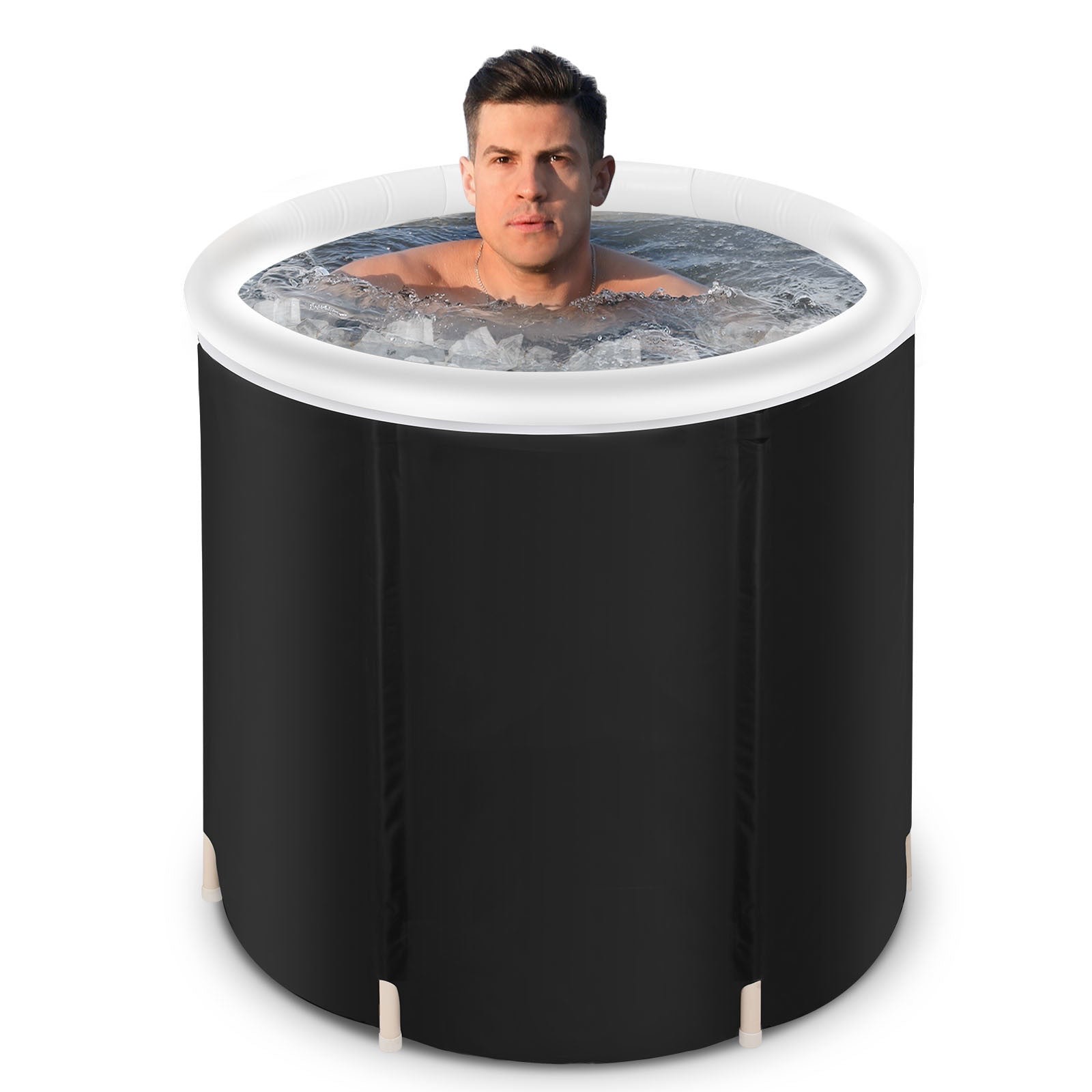
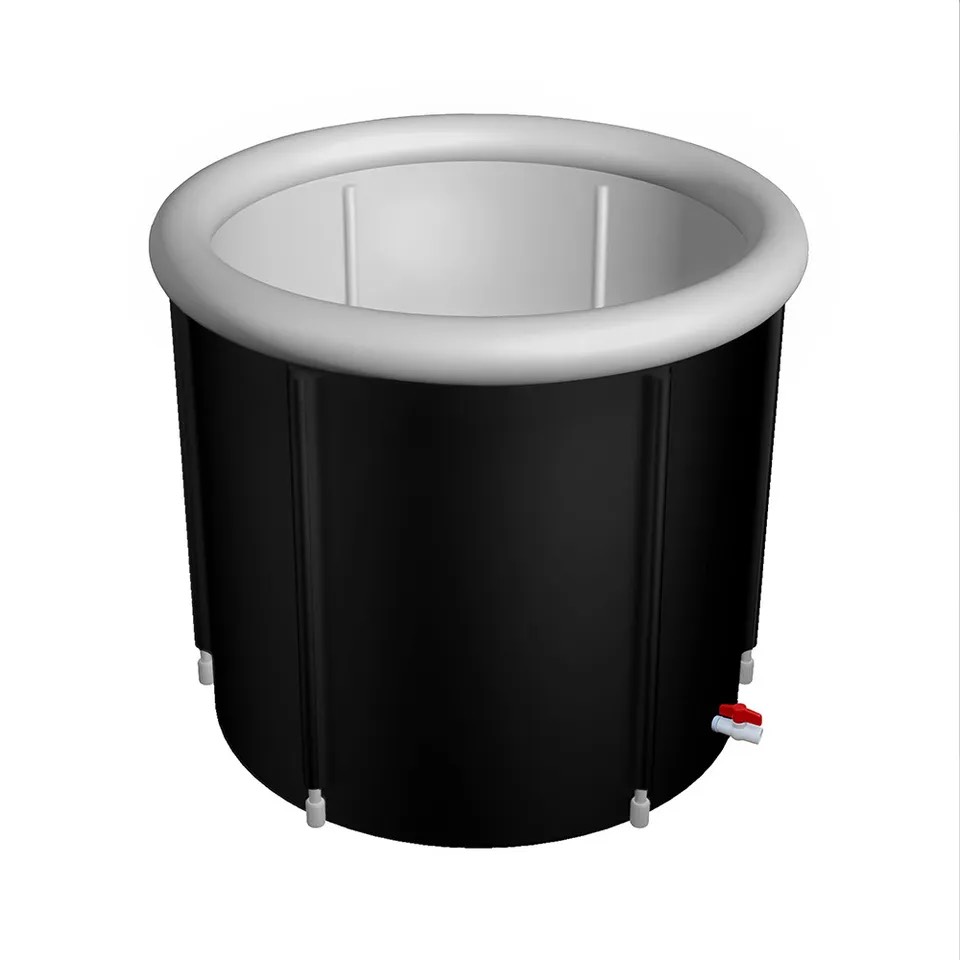
Aldi has run an inflatable ice bath as a Specialbuy — its rotating range of limited-run seasonal items — more than once. It first appeared at £29.99, and returned at £24.99 in a more recent restock (both dates and prices checked against Aldi's own press releases, checked July 2026). The product itself is understood to be manufactured by Bestway (inferred from product references rather than an Aldi spec sheet), made from what Aldi calls "Tritech" puncture-resistant material, with a secure cover and rope fastener, and takes roughly 20 minutes to inflate. It's built for single-person use.
Because it's a Specialbuy, availability rotates — it sells out, disappears from stores, and reappears months later, sometimes at a different price. If you're planning to buy one, check current stock at aldi.co.uk before making a special trip, since we can't guarantee it's on shelves the day you read this.
If your honest goal is "I want to try cold water immersion for a few weeks and see whether I actually like it or stick with it," this is a sensible way to spend £25. There's no meaningful financial risk in finding out cold plunging isn't for you, and it does the one job that matters for a first attempt: it holds cold water around your body long enough to complete a session. Fill it from a hose or bath tap, add bagged ice if you want it colder than tap temperature, and you have a working ice bath for less than the cost of a single sports massage.
We'd rather you spent £25 to find out you don't enjoy it than £129 or £599 to find out the same thing. That's not a backhanded compliment — it's the actual, honest best use case for this product, and Aldi deserves credit for making cold exposure accessible at effectively zero financial risk.
This page is for general information and does not constitute medical advice. Cold water immersion is not a medical treatment. Consult a professional if you have cardiovascular conditions. Competitor prices and policies were checked at the date shown above and may have changed since.
Budget, mid-market, and premium ice baths compared honestly — including where Aldi's £25 tub genuinely makes sense and where it doesn't.
Where to put it, how to fill it, what actually needs a chiller versus ice, and what you can skip. A practical setup guide for a home cold plunge that gets used.
Where to start, how fast to progress, and how to fit cold plunging around training without undoing your gains. A week-by-week protocol grounded in the evidence.
None of this makes it a good long-term setup once cold plunging becomes a real habit rather than an experiment, and it's worth being specific about why:
Insulation. An inflatable PVC tub has essentially none. Ice melts faster in an uninsulated inflatable than in a rigid, insulated tub, which means more bags of ice per session and a shorter usable window before you're topping up again. If you're plunging three times a week, that cost adds up fast and starts to erode the price advantage.
Durability. PVC punctures. Regular inflating, deflating, folding, and storing — especially outdoors, especially in a garage or garden where sharp edges are common — shortens the realistic lifespan versus a rigid tub built for repeated setup and teardown.
No chiller compatibility. This is the big one if you're serious about a routine. Once you're plunging regularly enough that buying ice every session gets tedious or expensive, the next logical step is a standalone chiller that keeps water cold automatically. Inflatable tubs generally aren't built to connect to one — you're stuck buying ice indefinitely, or upgrading the tub anyway to get chiller compatibility.
No temperature retention claims. We checked Aldi's own marketing copy directly, and neither of their press releases for this product make any claim about insulation or how long the water stays cold. That's not a knock on Aldi for omitting it — it's a fair signal that temperature retention wasn't a design priority at this price point, and you should set your expectations accordingly.
The tub you buy doesn't change what the underlying research supports, and this is worth being clear on because a lot of marketing — ours included, if we're not careful — implies the equipment is where the benefit comes from. It isn't. The evidence for reduced muscle soreness after exercise comes from a 2012 Cochrane review by Bleakley and colleagues, and the water temperatures typically studied for that effect sit in the 10-15°C range for around 10-15 minutes — not a specific brand or price point. A £25 inflatable filled to that temperature range and held for that duration gets you the same physiological exposure as any other tub. What differs between an inflatable and a rigid, insulated tub is entirely about convenience, durability, and how much ongoing effort it takes to maintain that temperature session after session — not whether the cold itself "counts." See our full breakdown of what the research actually supports if you want the citations in one place.
It's also worth repeating the standard safety guidance regardless of which tub you use: cold water immersion causes a real cardiovascular strain, particularly in the first seconds of entry (the "cold shock response" documented by Tipton and colleagues). Nobody should plunge alone, and anyone with a heart condition, uncontrolled blood pressure, or Raynaud's phenomenon should speak to a doctor first. A £25 tub carries exactly the same physiological risk profile as an £11,000 one at the same water temperature — the price tag has no bearing on how carefully you should approach the practice itself.
If you do pick one up, here's what a sensible first month looks like: fill it with cold tap water, and unless you're in the depths of winter when tap water alone may already sit close to the studied range, add bagged ice gradually until a floating thermometer reads somewhere in the 10-15°C band rather than guessing. Start with shorter sessions — two or three minutes is a reasonable opening point — and build duration gradually rather than aiming for the longest time you've read about online. Keep the water reasonably fresh; without a filtration system, an inflatable tub used several times a week benefits from a fuller drain-and-refill more often than a chiller-fed tub would need. None of this requires spending more money — it just requires treating the £25 tub as seriously as you'd treat any other cold plunge setup, because physiologically, it is one.
If you've done a few weeks of inflatable-tub plunging and you're still doing it — genuinely, not just intending to — that's the signal to move to a rigid, insulated tub. At that point the ice savings and durability start to justify the higher upfront cost, and if you're plunging often enough to consider a chiller, you'll need a tub built to accept one anyway. Our Plunge 80 at £59 is the smallest step up — still an entry price, but insulated and chiller-ready when you get there — and our full buyer's guide covers the rest of the range if you want to go further immediately.
Buy the Aldi/Bestway inflatable if you want to try cold water immersion for minimal outlay and aren't sure it'll stick. Don't expect it to hold temperature well, don't expect it to last years of regular use, and don't expect it to ever connect to a chiller — those are the honest trade-offs for £25. If you already know you're going to make this a routine, skip straight to a rigid, insulated tub and save yourself the ice bags.
Aldi/Bestway pricing, materials, and specifications above were checked directly against Aldi's own press releases in July 2026. Specialbuys rotate — always confirm current stock and price at aldi.co.uk before visiting a store.

Kaldera Plunge 80 + Chill Core 300 + Floating Thermometer, boxed together